
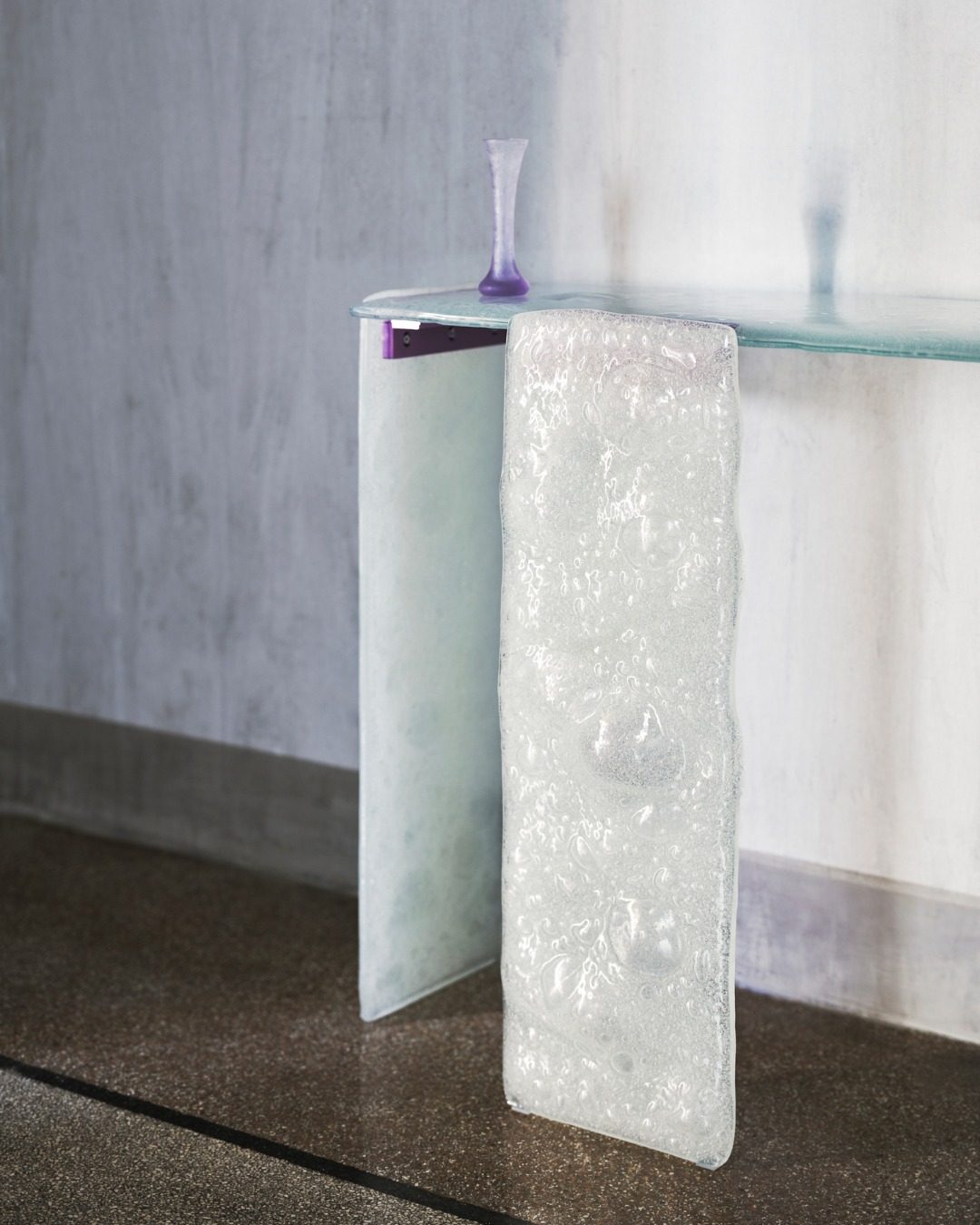
Glas Italia's Opalia series begins with a question about materials. Designed by Patricia Urquiola, the collection grows out of her research into what happens when materials are reused, and what they can become when they are asked to take a new shape.
The starting point is simple to describe and unusual in practice. Crystal offcuts are melted down, and the molten material settles into irregular forms. Each piece is unique. The surfaces look soft, almost liquid, as though they had been caught in the middle of a slow movement.
Imperfection as form
What stays with you most is the presence of bubbles. They are rich and varied across the surfaces, and they catch the light in a way that a smooth, perfectly cast object never could. The brand describes this as an aesthetic of transformation, one that finds its artistry in imperfection.
That idea sits at the heart of the series. Nothing in Opalia has been corrected into sameness. The irregularity is not a flaw to be hidden but the very reason each table, console or bookcase exists in its own right.
How it lives in a room
Opalia pieces are designed as tables, consoles and bookcases, and they bring a quiet sculptural weight to the spaces they occupy. Placed in a room, they tend to hold the eye without demanding it. Light passes through the crystal and moves across the floor and walls, so the object seems to change with the hour of the day.
It is a collection that rewards slow looking. Set against more regular furniture, its soft, liquid-like contours offer a calm counterpoint, a reminder that old material can find a new life and that imperfection can be the point.